

If you have sudden breathlessness, chest pain, or cough up blood, especially with a swollen leg, go to the nearest emergency department now. These can be signs of a clot that has travelled to the lungs (pulmonary embolism).
Deep vein thrombosis (DVT) is a blood clot in a deep vein, usually in the calf or thigh. It is common, treatable and often preventable. Prompt diagnosis matters, because a clot can travel to the lungs, and an untreated clot can damage the vein for life.
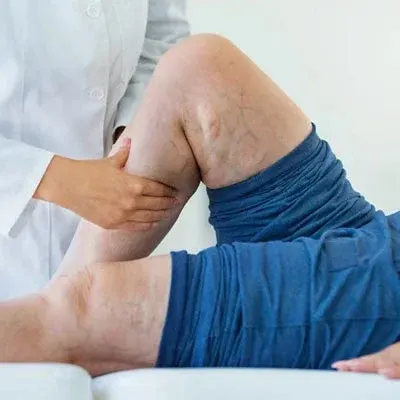
Early signs of DVT in the leg
DVT usually affects one leg. Watch for:
- Swelling of the calf, ankle or whole leg
- Pain or tenderness, often felt as a cramp or ache in the calf that does not settle
- Warmth over the affected area
- Red or darker skin compared with the other leg
- Veins near the surface looking more prominent
Around half of DVTs cause few or no symptoms. That is why people with risk factors should not ignore even mild one-sided swelling.
Who is at risk?
Clots form when blood flows slowly, the vein wall is injured, or the blood clots more easily than normal. Common risk factors include:
- Recent surgery, especially hip, knee or abdominal surgery
- Hospital stay, bed rest or a plaster cast
- Long journeys of more than about 4 hours by car, train or plane
- Cancer and some cancer treatments
- Pregnancy and the first 6 weeks after delivery
- Oestrogen-containing pills or hormone therapy
- Obesity and smoking
- A previous DVT, or a family history of clots
- Inherited clotting conditions, and some chronic illnesses such as heart failure or inflammatory bowel disease
- Compression of the left iliac vein in the pelvis (May–Thurner syndrome)
How DVT is diagnosed
- Clinical assessment: the doctor estimates how likely DVT is from your symptoms and risk factors.
- D-dimer blood test: a normal result helps rule DVT out when the chance is low.
- Venous Doppler (duplex) ultrasound: the main test. It is painless, needs no radiation, and shows where the clot is and how far it extends.
- CT or MR venography: used in some cases to look at veins in the pelvis and abdomen.
Treatment
Blood thinners (anticoagulants)
Most DVTs are treated with blood thinners for at least 3 months, and longer in some patients. They stop the clot from growing and lower the risk of it travelling to the lungs while your body slowly breaks it down. Take them exactly as prescribed, and do not stop without speaking to your doctor.
Catheter-based treatment for large clots
For selected patients, usually those with large clots in the thigh or pelvic veins (iliofemoral DVT), severe swelling, or a limb at risk, an interventional radiologist may remove or dissolve the clot through a small puncture:
- Catheter-directed thrombolysis: clot-dissolving medicine delivered directly into the clot through a thin tube.
- Mechanical thrombectomy: devices that break up and remove the clot, often in a single session.
- Venous stenting: opens a narrowed pelvic vein, for example in May–Thurner syndrome, to lower the chance of the clot coming back.
- IVC filter: a small temporary device placed in the main abdominal vein for patients who cannot take blood thinners. It is removed once it is no longer needed.
These procedures are done under local anaesthesia with imaging guidance and need no open surgery. Whether they are right for you depends on where the clot is, how long it has been there, and your bleeding risk.
Compression and staying active
Walking as soon as your doctor allows, raising the leg when resting, and graduated compression stockings when advised can reduce swelling and discomfort.
Long-term effects of DVT
- Post-thrombotic syndrome: damage to the vein valves can leave the leg with long-term swelling, heaviness, skin darkening and, in severe cases, ulcers. It can develop in a sizeable share of patients within 2 years. Clearing large clots early may lower this risk in selected cases.
- Recurrence: a previous DVT raises the risk of another, so the length of blood-thinner treatment is planned around your individual risk.
- Chronic pulmonary hypertension: rarely, clots that reached the lungs leave lasting high pressure in the lung arteries. Report ongoing breathlessness after treatment.
Preventing DVT
- Get moving early after surgery or illness, and follow any clot-prevention injections or tablets prescribed.
- On long journeys, walk every 1–2 hours, flex your ankles, drink water and avoid alcohol.
- Keep a healthy weight and stop smoking.
- If you have had a clot before, tell your doctor before surgery, pregnancy or starting hormone medicines.
DVT care in Vasai-Virar and nearby
Dr. Chandrakant S. Kamble (MBBS, MD, DNB, FRCR(IIA), FVIR) is a vascular and interventional radiologist. He sees patients at Midas Sonography & Vascular Clinic, Ambadi Road, Vasai (W), and at partner hospitals across Vasai-Virar and Mira Road, with patients also coming from Mumbai and Thane. He offers Doppler assessment and catheter-based treatment for DVT. Learn more on our DVT treatment page.
Book a consultation or call +91 92092 32601. Bring any previous scans and a list of your medicines.
This article is general information, not a diagnosis or a substitute for advice from your own doctor.