

Many people put leg pain down to age, weak muscles or “nerves”. But if your calf, thigh or buttock cramps after walking a certain distance and eases within minutes of stopping, that pattern has a name: intermittent claudication. It is the classic symptom of peripheral arterial disease (PAD), the narrowing of the arteries that carry blood to the legs.
What is peripheral arterial disease?
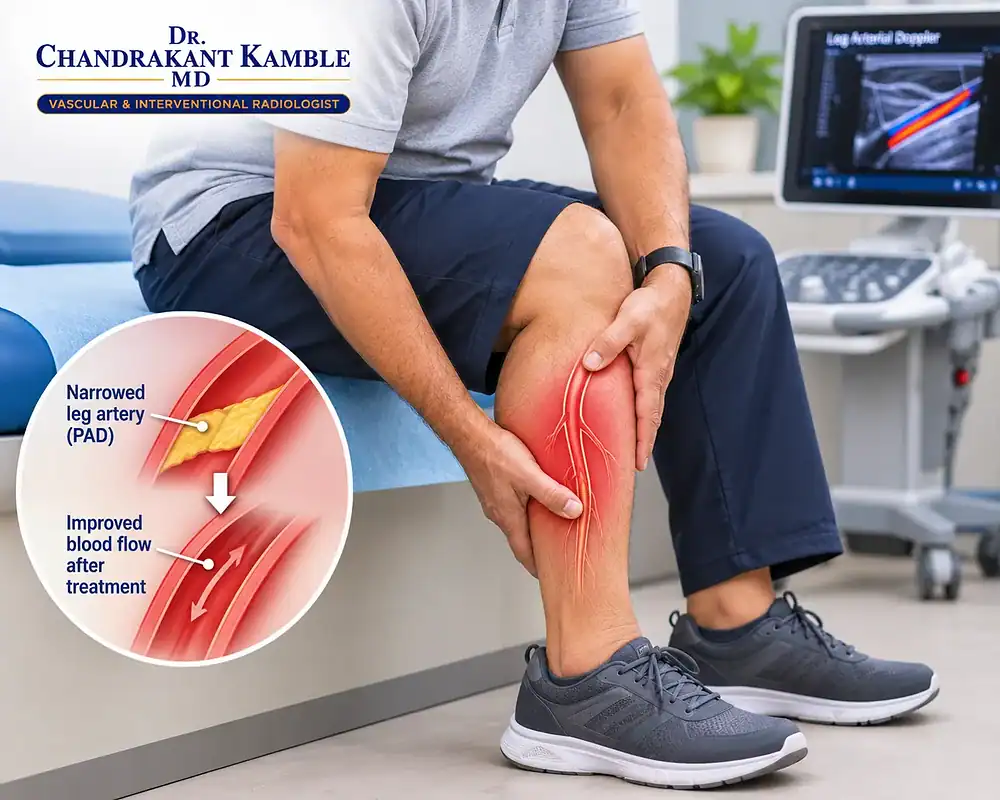
In PAD, fatty plaque builds up inside the leg arteries (atherosclerosis), narrowing them. At rest, enough blood gets through. When you walk, your leg muscles need more oxygen than the narrowed arteries can deliver, so they cramp and ache. When you stop, demand falls and the pain fades.
PAD is the same disease process that causes heart attacks and strokes, just in the legs. Having PAD is also a warning sign for your heart. More about peripheral arterial disease.
Who is at risk?
- Smoking or chewing tobacco: the strongest risk factor
- Diabetes: PAD often affects arteries below the knee
- high blood pressure and high cholesterol
- age over 50
- kidney disease
- a personal or family history of heart disease or stroke
Is it PAD, a vein problem or something else?
| PAD (artery) | Varicose veins (vein) | Nerve / spine problem | |
|---|---|---|---|
| When it hurts | After walking a fixed distance | After long standing, worse by evening | Standing or walking; often with back pain |
| What helps | Stopping for a few minutes | Raising the legs, walking | Sitting or bending forward |
| Feel of the leg | Cramping, tight calf | Heavy, aching, swollen | Burning, tingling, shooting |
| Foot | May be cold, pale, weak pulses | Warm, sometimes swollen | Normal colour |
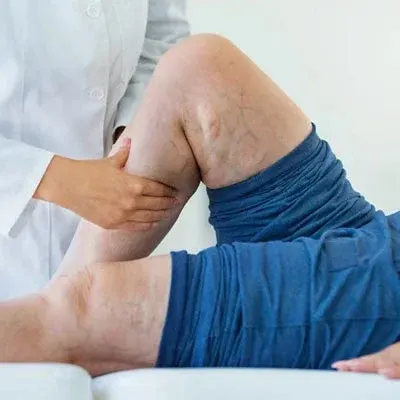
These patterns overlap, and some people have more than one problem. A simple examination and scan can tell them apart. Read about varicose veins.
Danger signs: when PAD becomes urgent
PAD can progress to critical limb ischaemia, when blood flow is too low even at rest. Seek prompt medical care for:
- pain in the foot or toes at night that eases when you hang your leg over the bed
- a sore or wound on the foot that won’t heal
- black or blue toes
- a cold, pale foot
Go to an emergency department immediately if a leg suddenly becomes cold, pale, painful, numb or weak. This can mean a sudden blockage, which needs treatment within hours to save the limb.
How PAD is diagnosed
- Examination: checking pulses in the groin, behind the knee and on the foot.
- Ankle-brachial index (ABI): compares blood pressure at the ankle and arm. A value below about 0.9 suggests PAD. It is quick and painless.
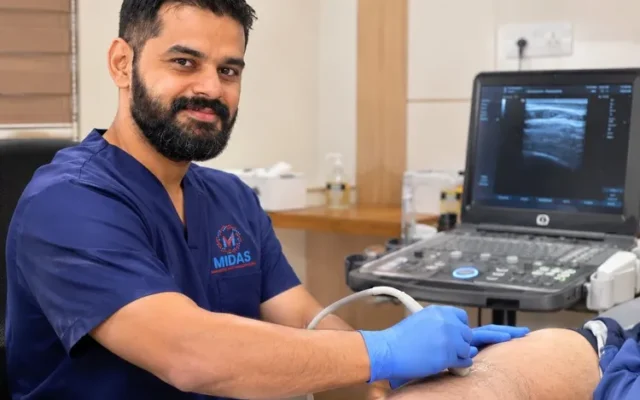
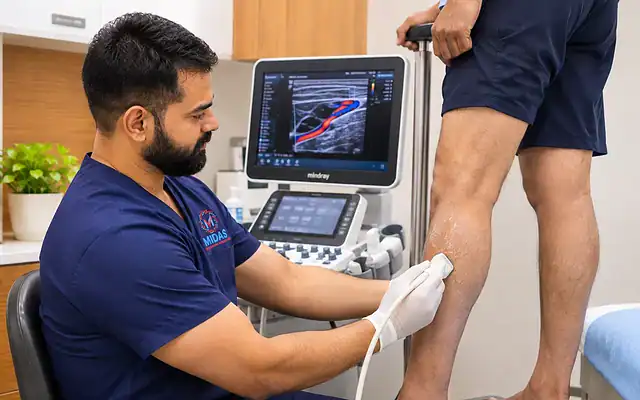
- Arterial Doppler ultrasound: maps where the arteries are narrowed or blocked, without radiation.
- CT angiography or catheter angiography: to plan treatment if a procedure is being considered.
Treatment
1. Protect your arteries (everyone with PAD)
- Stop smoking and tobacco. This is the single most effective step.
- Control blood sugar, blood pressure and cholesterol with your physician.
- Take the medicines your doctor prescribes (often blood thinners and cholesterol-lowering tablets).
2. Walking therapy
A structured walking programme is one of the best treatments for claudication. Walk until the pain becomes moderate, rest until it settles, then walk again, for 30–45 minutes, at least three times a week. Over a few months, many people can walk much further as the muscles adapt and small collateral vessels develop.
3. Minimally invasive procedures: angioplasty and stenting
If symptoms limit your life despite these measures, or if there is rest pain or a wound, the narrowed artery can often be opened with angioplasty. A thin wire and balloon are passed through a needle puncture, usually in the groin, under X-ray guidance. A stent may be placed to keep the artery open. This is done under local anaesthesia, often with a short hospital stay.
4. Surgery
For long blockages unsuitable for angioplasty, bypass surgery by a vascular surgeon may be an option.
Living with PAD
- Keep walking every day.
- Inspect your feet daily, especially if you have diabetes. Diabetic foot and circulation
- Wear well-fitting shoes; never walk barefoot.
- Keep regular check-ups for your heart, blood pressure and sugar.
Get your legs checked in Vasai-Virar
Dr. Chandrakant S. Kamble, vascular & interventional radiologist, assesses leg pain with examination and Doppler ultrasound at Midas Sonography & Vascular Clinic, Ambadi Road, Vasai (W). When needed, he performs minimally invasive treatment to restore blood flow. The clinic is open Monday to Saturday, 10 AM – 9 PM.
About PAD treatment · Book a consultation
Frequently asked questions
Why do my calves hurt when I walk but not when I rest?
A cramp that comes on after a predictable distance and eases within minutes of stopping is typical of reduced blood flow from narrowed leg arteries (claudication). It should be checked.
Is PAD dangerous?
PAD itself can progress to rest pain, wounds and, rarely, gangrene. It also signals a higher risk of heart attack and stroke, so treating risk factors is important.
Can blocked leg arteries be opened without surgery?
Often, yes. Angioplasty, sometimes with a stent, opens narrowed arteries through a needle puncture under local anaesthesia.
Will walking make PAD worse?
No. Regular walking, stopping to rest when pain becomes moderate, is one of the most effective treatments for claudication.
What test diagnoses PAD?
The ankle-brachial index (ABI) and an arterial Doppler ultrasound are the usual first tests. Both are painless.
This article is for general information. A sudden cold, painful or numb leg is an emergency; go to the nearest hospital.