Many people in Vasai-Virar put up with heavy, aching legs for years because they think varicose veins mean “an operation”. For most patients today, that is no longer true. Open surgery to tie and strip the vein has largely been replaced by minimally invasive, image-guided treatments. These are done through a needle puncture under local anaesthesia, and you walk out the same day.
This guide explains the four main non-surgical options, how they differ, and how your doctor decides which one is right for your legs.
Why varicose veins happen, and why that matters for treatment
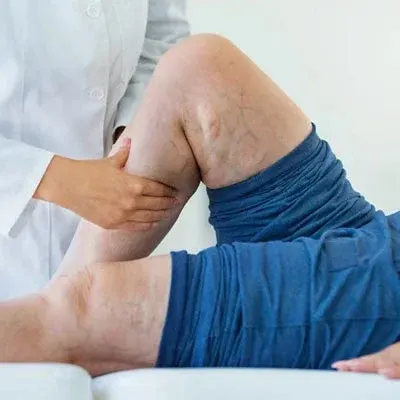
Leg veins have one-way valves that keep blood moving up towards the heart. When these valves weaken, blood falls back down and pools. This is called venous reflux. The pressure stretches the veins until they bulge and twist.
The visible bulging veins are usually the result. The cause is often a larger faulty vein deeper under the skin, most commonly the great saphenous vein on the inner thigh and calf, or the small saphenous vein at the back of the calf. Treating only the visible veins without closing the leaking vein underneath is a common reason varicose veins come back.
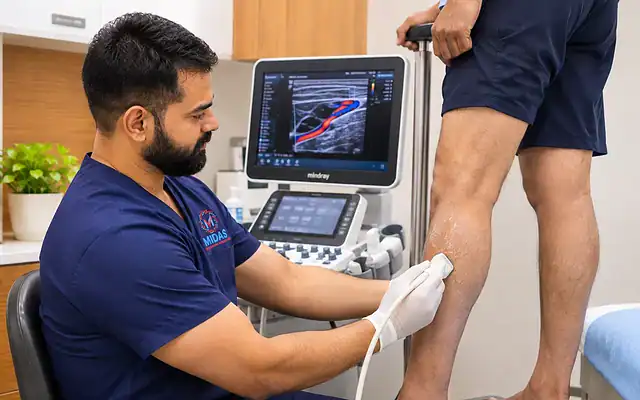
This is why every good treatment plan starts with a venous Doppler (duplex) ultrasound scan, not with the appearance of the leg. Read what a venous Doppler scan shows.
The four main options at a glance
| Treatment | How it closes the vein | Anaesthesia | Typical use | Back to routine |
|---|---|---|---|---|
| Laser ablation (EVLA / EVLT) | Heat from a thin laser fibre inside the vein | Local, numbing fluid around the vein | Main leaking saphenous veins | Usually 1–2 days |
| Radiofrequency ablation (RFA) | Heat from a radiofrequency catheter | Local, numbing fluid around the vein | Main leaking saphenous veins | Usually 1–2 days |
| Cyanoacrylate glue (e.g. VenaSeal) | Medical adhesive seals the vein | Local at the entry point only | Main saphenous veins; useful when heat is less suitable | Often the same or next day |
| Foam sclerotherapy | A medicine foam irritates the vein lining so it closes | Usually none | Smaller, twisting branch veins; recurrent veins; spider veins (liquid form) | Same day |
Compression stockings are not a cure, but they relieve symptoms and are often used alongside these treatments. Surgery still has a place for a small number of patients, but international guidelines (such as the UK’s NICE guidance on varicose veins) recommend heat-based ablation first for most people with leaking saphenous veins.
1. Laser ablation (EVLA)
How it’s done: under ultrasound guidance, a thin fibre is passed into the faulty vein through a needle puncture, usually near the knee. Numbing fluid is injected around the vein. As the fibre is slowly withdrawn, laser energy heats and seals the vein shut. Blood then reroutes through healthy veins.
What it feels like: most people feel the needle pricks for the numbing fluid and some pressure. The procedure itself usually takes under an hour per leg.
Afterwards: you walk out of the clinic, wear a compression stocking for a short period, and return to most routine activities within a day or two. Some tightness and bruising along the treated vein is common for one to two weeks. See the day-by-day recovery guide.
Results: in published studies, the treated vein stays closed in the large majority of patients, often well over 90% at one year.
2. Radiofrequency ablation (RFA)
RFA works on the same principle as laser. It uses heat delivered from inside the vein, with a radiofrequency catheter instead of a laser fibre. Outcomes for the two are broadly similar in good hands. Some patients report slightly less bruising with RFA, but the choice usually depends on the vein’s size and shape and on the equipment and experience available.
3. Glue treatment (cyanoacrylate)
A tiny amount of medical-grade adhesive is placed inside the vein through a catheter, and the vein is pressed closed. Because no heat is used, the numbing injections along the vein aren’t needed. Many patients don’t need a compression stocking afterwards.
Points to consider: it usually costs more than heat-based ablation, and a small number of people develop a local inflammatory reaction along the vein. It is a good option in selected cases, but not automatically “better”.
4. Foam sclerotherapy
A medicine called a sclerosant is mixed into a fine foam and injected into the vein under ultrasound guidance. The foam displaces the blood and irritates the vein wall, so the vein closes and fades over the following weeks.
Best for: twisting branch veins below the knee, veins that return after earlier treatment, and, as a liquid, smaller spider and thread veins. Several sessions may be needed. Temporary brownish staining of the skin over the vein can occur and usually fades over months.
Which option is right for you?
There is no single best treatment for everyone. The choice depends on:
- What the Doppler scan shows: which veins leak, their diameter and depth, and whether the deep veins are healthy.
- The shape of the vein: a very twisted vein may not allow a fibre or catheter to pass, so foam may suit better.
- Previous treatment or blood clots: recurrent veins and past DVT change the plan.
- Your health and preferences: medicines such as blood thinners, pregnancy plans, cost and recovery time.
Often the best result comes from combining treatments: ablation for the main leaking vein, and foam or small micro-incisions for the visible branches, either at the same visit or a few weeks later.
Who should not wait
Book an assessment promptly if you have:
- skin darkening, thickening or eczema-like itching around the ankle
- a wound near the ankle that is slow to heal (about venous leg ulcers)
- bleeding from a varicose vein
- a red, hot, painful, hard vein, or sudden swelling of one leg. These need same-day medical attention to rule out a blood clot.
At our clinic
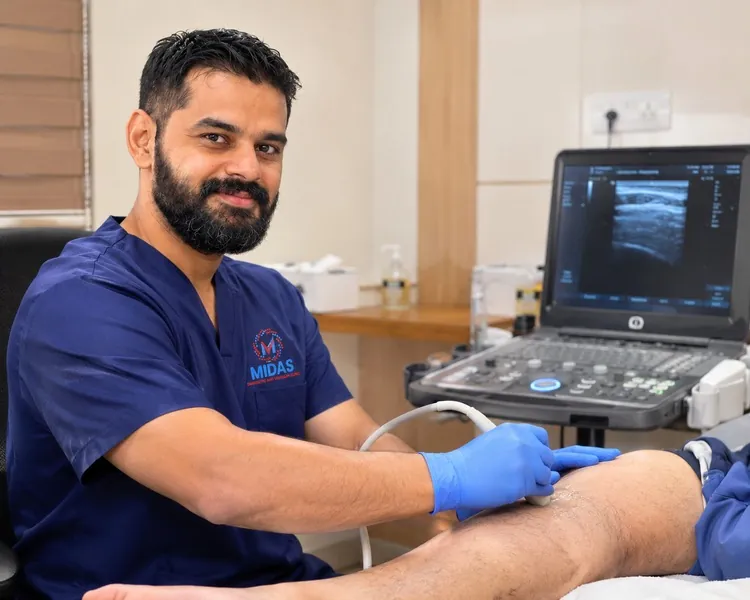
Dr. Chandrakant S. Kamble is a vascular and interventional radiologist (MBBS, MD, DNB, FRCR(IIA), FVIR). He assesses every patient with a duplex ultrasound before recommending treatment. At Midas Sonography & Vascular Clinic, Ambadi Road, Vasai (W), the scan and the treatment plan are usually completed at the first visit. Options include laser ablation, sclerotherapy and compression therapy. He also consults at partner hospitals in Virar and Mira-Bhayandar.
Read more about varicose veins treatment in Vasai-Virar · Understand treatment costs · Book a consultation
Frequently asked questions
Is laser treatment for varicose veins painful?
It is done under local anaesthesia, so most people feel only the needle pricks for the numbing fluid and some pressure. Mild soreness or tightness along the vein for a week or two is common and usually managed with walking and simple painkillers your doctor advises.
How long does the procedure take?
Usually under an hour per leg, including preparation. You walk out the same day.
Will I need to stay in hospital?
Most patients go home the same day. A short stay is occasionally advised for combined procedures or other medical reasons.
Is non-surgical treatment as effective as surgery?
For the main leaking saphenous veins, heat-based ablation has closure and recurrence results that are comparable to or better than traditional stripping, with a quicker recovery. This is why guidelines now recommend it first for most patients.
Do I still need compression stockings after treatment?
Usually for a short period after laser or RFA. Your doctor will tell you how long. Glue treatment often needs little or no compression.
This article is for general information and is not a substitute for a medical consultation. Treatment choice depends on your examination and scan findings.